

| What Is a Next-Generation Firewall (NGFW) and Why Your Business Needs One |
For years, a firewall’s job was simple: look at the source and destination of a packet, check it against a port/IP rule, and allow or block it. That model worked when most traffic was easy to categorise by port number. It breaks down against modern applications, most of which now run over the same HTTPS port regardless of what they actually do.
What Makes a Firewall ‘Next-Generation’
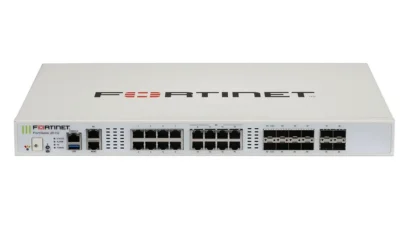
A next-generation firewall (NGFW) inspects traffic at the application layer, not just the network layer. Instead of only asking ‘is port 443 allowed?’, it asks ‘what application is actually running over this connection, and does policy allow it?’ Fortinet’s FortiGate range, for example, combines several inspection layers in one appliance: application control, intrusion prevention (IPS), antivirus/anti-malware, web filtering, and SSL/TLS inspection so encrypted traffic doesn’t hide threats from view.
Why This Matters More Than It Used To
Three shifts have made NGFWs necessary rather than optional for most organisations:
- Encryption is now the default. The vast majority of web traffic is encrypted, so a firewall that can’t inspect inside TLS is largely blind to what’s actually happening on the network.
- Applications, not ports, define risk. A file-sharing app and a business SaaS tool can use the same port; only application-aware inspection tells them apart.
- Threats increasingly hide in ‘allowed’ traffic. Phishing links, malicious attachments and command-and-control traffic often travel over normal-looking HTTPS connections, which is exactly where IPS and sandboxing integration earn their keep.
Where FortiGate Fits
Fortinet’s FortiGate appliances span everything from compact desktop units for small offices (the 40F/60F/90G tier) up to high-throughput models for data centres and campuses (300E and above), plus virtual appliances for cloud and hypervisor deployments. All of them run the same FortiOS operating system and share the same FortiGuard threat intelligence feed, so the security policy you define doesn’t need to be reinvented as you scale from one branch to fifty.
Signs Your Business Has Outgrown a Basic Firewall
- You can’t see which applications are actually consuming your bandwidth
- You have no visibility into encrypted (HTTPS) traffic
- Remote and branch staff connect over consumer-grade VPN tools rather than a managed solution
- You’ve had a phishing or ransomware incident that started with something a basic firewall let straight through
Frequently Asked Questions
Is an NGFW only for large enterprises?
No. Fortinet’s FortiGate range includes compact, affordable models built specifically for small offices and branch locations, so NGFW-grade inspection isn’t limited to large data centres.
Does an NGFW replace antivirus software on endpoints?
No — it complements it. An NGFW protects the network perimeter and inspects traffic in transit; endpoint protection secures the device itself. Most organisations run both.
Will inspecting encrypted traffic slow down my network?
It can, if the firewall isn’t sized correctly. Fortinet’s FortiGate appliances use purpose-built security processors precisely to keep SSL inspection fast — sizing the right model for your traffic volume is the key decision.
How do I know which FortiGate model my business needs?
MetaPoint Technologies’s pre-sales team can size a FortiGate model against your user count, traffic volume and branch topology. Contact us on WhatsApp at +91 99895 44438.
Talk to an Authorised Fortinet Partner
MetaPoint Technologies is an authorised Fortinet partner serving customers across Hyderabad, Telangana, Andhra Pradesh and Karnataka. If you’re evaluating an NGFW for the first time or replacing an ageing firewall, our pre-sales team can help you size the right FortiGate model and licensing tier. Call or WhatsApp +91 99895 44438 for a quote.”