
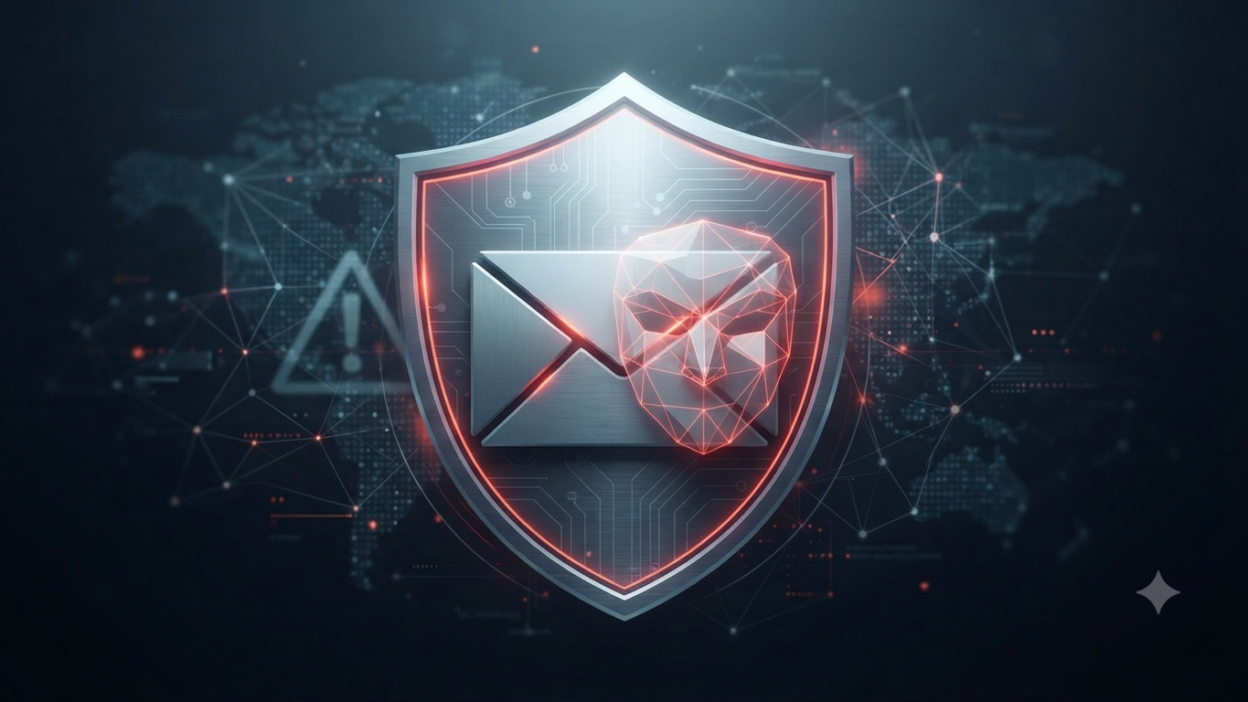
Business email compromise (BEC) attacks rarely contain malware or obvious spam markers — they’re often just a well-written email impersonating a CEO or vendor, which is exactly why they slip past filters built to catch bulk spam and known malware signatures.
Why Standard Filtering Misses BEC
Built-in email filtering (Microsoft 365, Google Workspace default protection) is tuned to catch volume spam and known-bad attachments. A targeted, personalized email with no attachment or link — just a request to transfer funds or change payment details — often doesn’t trigger those defenses at all.
Proofpoint’s Approach: Behavior and Impersonation Detection
Proofpoint specifically analyzes sender behavior patterns, domain impersonation, and language markers associated with BEC and executive impersonation, rather than relying solely on known-bad signatures — catching the exact category of attack that costs businesses the most per successful incident.
Vendor Email Compromise Is Just as Costly
BEC isn’t limited to internal executive impersonation — attackers increasingly compromise or spoof vendor email accounts to redirect legitimate invoice payments. Proofpoint’s protection extends to this vendor-impersonation pattern as well.
Technology Alone Isn’t Enough
Even strong email security should be paired with a simple internal policy: verbal or secondary-channel confirmation for any payment detail change or unusual fund transfer request, regardless of how legitimate the email looks.
How MetaPoint Can Help
MetaPoint deploys and tunes Proofpoint specifically to catch BEC and impersonation attacks that standard email filtering misses, for businesses across Hyderabad, Telangana, Andhra Pradesh, and Karnataka. Contact us if executive or vendor impersonation is a concern.
FAQ’s
Why do business email compromise (BEC) attacks slip past standard email filters?
BEC emails rarely contain malware or attachments — they’re often just a well-written impersonation of a CEO or vendor, which doesn’t trigger filters tuned to catch bulk spam and known-bad attachments.
How does Proofpoint catch BEC differently?
It analyzes sender behavior patterns, domain impersonation, and language markers associated with BEC and executive impersonation, rather than relying only on known-bad signatures.
Is BEC limited to executive impersonation?
No — attackers increasingly compromise or spoof vendor email accounts to redirect legitimate invoice payments, a pattern Proofpoint’s protection also covers.
Is email security software alone enough to stop BEC?
No. It should be paired with a simple internal policy requiring verbal or secondary-channel confirmation for any payment detail change or unusual transfer request, regardless of how legitimate the email looks.