
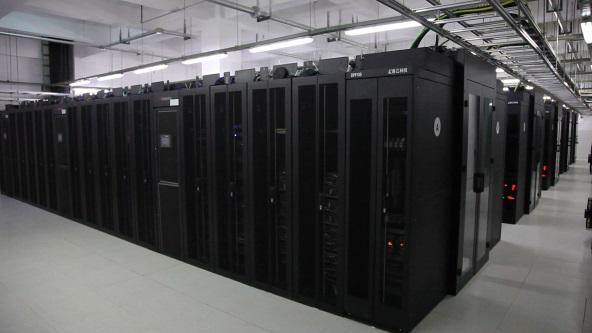
Setting up a data centre or server room in Hyderabad requires seven core systems — server hardware, storage, networking, power and UPS, cooling, racks and cabling, and physical security — plus backup and monitoring software. For a small enterprise server room the typical investment starts in the ₹8–15 lakh range, while a full mid-size data centre runs into several crore depending on rack count, redundancy, and uptime targets. The biggest cost drivers are redundancy level (N, N+1, or 2N), cooling design, and storage capacity — not the servers themselves.
If you’re a business in Hyderabad planning to build or upgrade in-house infrastructure, this guide walks through exactly what you need, what each component does, and where the money actually goes.
Why businesses in Hyderabad are building on-premise and hybrid data centres
Hyderabad has become one of South India’s fastest-growing IT and pharma hubs, and with that growth comes a need for data that stays close, compliant, and fast. While public cloud is excellent for elasticity, many regulated industries — pharmaceutical manufacturing, BFSI, healthcare, and government contractors across Telangana — still need on-premise or hybrid infrastructure for latency-sensitive workloads, data-residency rules, and predictable long-term costs.
A well-designed data centre gives you control over performance, security, and uptime. A poorly designed one becomes a recurring source of outages, overheating, and emergency spend. The difference is almost always in the planning.
The 7 core systems every data centre needs
1. Server hardware (the compute layer)
Servers are the engines of your data centre. Most enterprise deployments use rack-mounted servers from tier-1 vendors such as HPE ProLiant, Dell PowerEdge, or Lenovo ThinkSystem. Your choice of CPU core count, RAM, and form factor depends on whether you’re running virtualization, databases, ERP, or application hosting.
For most growing businesses, virtualization with VMware lets you run dozens of virtual machines on a handful of physical servers — dramatically improving utilization and lowering hardware count.
2. Storage systems
Storage is where your data lives, and it’s often the most underestimated cost. Options include:
- SAN/NAS arrays for centralised, high-availability storage
- NAS appliances from Synology or Netgear for SMEs and departmental storage
- Enterprise drives from Seagate and Western Digital for capacity at scale
The right storage tier depends on how fast you need data (IOPS) and how much you need to retain. Mixing SSD for hot data and HDD for archives keeps cost under control.
3. Networking equipment
Your network connects everything. A typical stack includes core and access switches (Cisco, HPE Aruba, Juniper, or D-Link), routers, and wireless access points for connected facilities. Structured cabling from Molex keeps the physical layer clean, labelled, and future-ready.
4. Power and UPS
Power continuity is non-negotiable. A data centre needs UPS systems and PDUs from vendors like APC by Schneider Electric or Vertiv, often backed by a diesel generator for extended outages. Sizing your UPS correctly — and planning for redundancy — protects against both blackouts and the voltage fluctuations common in many industrial areas.
5. Cooling and environmental control
Servers generate heat, and heat kills hardware. Precision cooling — in-row or CRAC units from Vertiv — maintains the temperature and humidity your equipment is rated for. Hot-aisle/cold-aisle layout planning has a direct impact on both reliability and your electricity bill.
6. Racks and cabling
Server racks house and organise your equipment. Proper rack planning, cable management, and labelling sound mundane but are the difference between a five-minute fix and a two-hour hunt during an incident.
7. Physical and network security
Finally, the data centre must be protected — physically with access control and surveillance, and digitally with firewalls (Fortinet FortiGate, Palo Alto, or Cisco), intrusion detection, and endpoint protection. We cover firewall selection in depth in our firewall guide for Hyderabad businesses.
Don’t forget the software layer
Hardware is only half the picture. A resilient data centre also needs:
- Backup and disaster recovery — Veeam or Commvault to protect against data loss
- Virtualization — VMware to maximise hardware efficiency
- Monitoring — ManageEngine and similar tools for real-time visibility into health, traffic, and alerts
What actually drives the cost
When businesses ask us “how much does a data centre cost in Hyderabad,” the honest answer is: it depends on four things.
- Redundancy level. An N+1 or 2N design (duplicate power, cooling, and network paths) costs significantly more than a single-path setup — but buys you uptime. Your acceptable downtime determines this.
- Storage capacity and performance. High-IOPS all-flash storage costs many times more than archival HDD capacity.
- Cooling design. Larger compute density means more cooling investment.
- Scale and future headroom. Building for today is cheaper; building for three years of growth saves you a costly rebuild.
This is why a fixed price list rarely helps. A proper site assessment — power availability, room dimensions, load calculation, and growth plan — produces a far more accurate budget than any online estimate.
How MetaPoint builds data centres in Hyderabad
MetaPoint Technologies has spent 15+ years designing and deploying data centre infrastructure for over 100 businesses across Telangana, Andhra Pradesh, and Karnataka. As a certified partner for HPE, Dell, Lenovo, Fortinet, Vertiv, VMware, Veeam, and 30+ other vendors, we handle the entire build end to end — from load calculation and rack design to installation, configuration, and ongoing managed support.
Whether you need a compact server room for a growing SME or a full-scale enterprise data centre infrastructure solution, we design it around your workload, budget, and uptime targets — with one partner and one invoice.
Frequently asked questions
How much does it cost to set up a data centre in Hyderabad? Costs vary widely based on rack count, redundancy, storage, and cooling. A small enterprise server room typically starts in the ₹8–15 lakh range, while mid-to-large data centres run substantially higher. MetaPoint offers a free site assessment to produce an accurate quote for your specific requirements.
What equipment is required for a data centre? The seven core systems are servers, storage, networking equipment, power/UPS, cooling, racks and cabling, and physical/network security — supported by backup, virtualization, and monitoring software.
Should I build on-premise or move to the cloud? It depends on your workloads and compliance needs. Many Hyderabad businesses choose a hybrid model — on-premise for latency-sensitive or regulated data, cloud for elastic workloads. MetaPoint helps assess and design the right mix.
How long does a data centre setup take? A small server room can be deployed in a few weeks; larger builds with custom cooling and redundancy take longer. Timeline depends on hardware lead times and site readiness.
Does MetaPoint provide ongoing data centre support? Yes. We offer managed service contracts with defined SLAs, including monitoring, maintenance, and same-day response for critical issues across Hyderabad and South India.
Planning a data centre or server room in Hyderabad? Get a free site assessment and quote from MetaPoint — or call +91 99895 44438.